


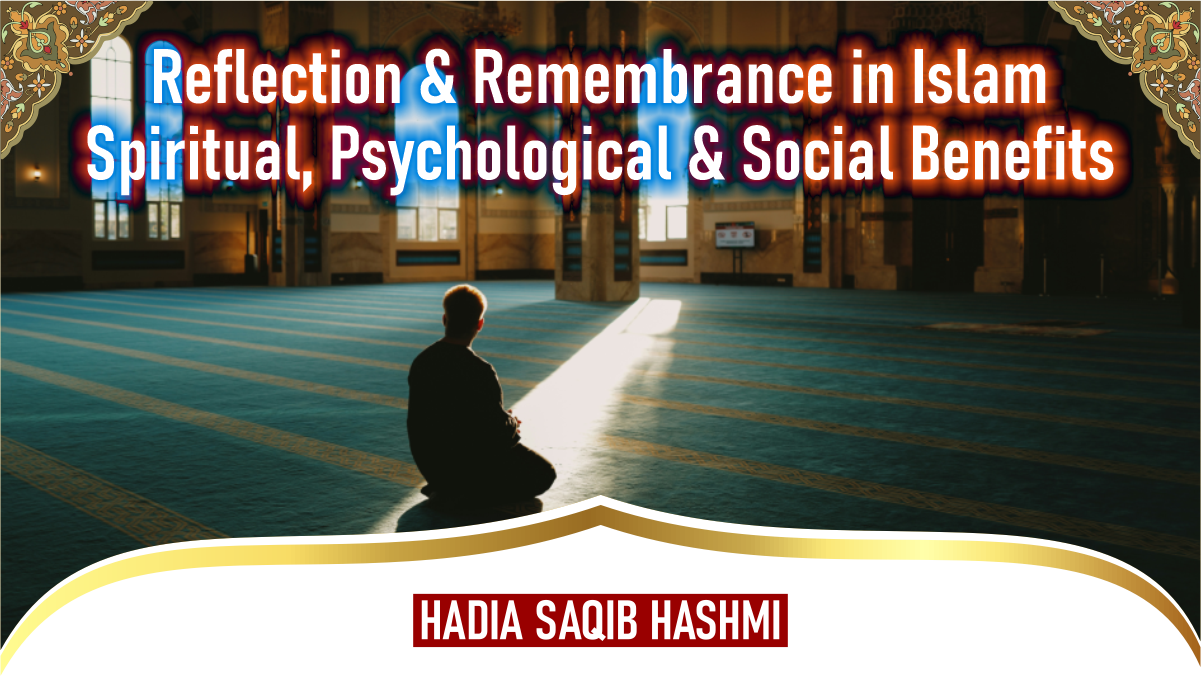
Islam provides a comprehensive framework for nurturing the human soul, mind, and character. One of the most profound aspects of Islamic spirituality is the encouragement of reflection upon the signs of Allah and constant remembrance of the Creator. Through reflection and remembrance, believers develop awareness of their purpose in life and strengthen their connection with Allah.
Practices such as dhikr (remembrance of Allah), tafakkur (reflection upon creation), tadabbur (deep contemplation of the Qur’an), muraqabah (awareness that Allah is observing us), and muhasabah (self-accountability) have always been central to Islamic spiritual life. These practices allow believers to cultivate inner peace, strengthen faith, and develop moral character.
The life of Muhammad provides the most powerful example of how reflection and remembrance should be practiced. His life demonstrates that contemplation was not limited to moments of solitude but was integrated into daily worship, prayer, and interaction with others.
Through the guidance of the Prophet ﷺ, believers learn that reflection and remembrance are essential tools for spiritual purification, emotional balance, and intellectual growth.
The Concept of Reflection and Remembrance in Islam
Reflection and remembrance are essential parts of the believer’s relationship with Allah. The Qur’an repeatedly calls upon believers to observe the signs of Allah in creation and to contemplate the wisdom behind them.
Allah says:
“Indeed, in the creation of the heavens and the earth and the alternation of the night and the day are signs for those of understanding those who remember Allah while standing or sitting or lying on their sides and reflect on the creation of the heavens and the earth.”
(Qur’an, 3: 190–191)
This verse demonstrates that remembrance and reflection are acts of worship that can occur in every moment of life.
The life of the Prophet ﷺ beautifully illustrates this principle. Even before the beginning of revelation, he would spend time reflecting upon the condition of society and seeking closeness to Allah. He would retreat to the Cave of Hira, where he spent periods in contemplation and worship. This habit of reflection prepared his heart for the momentous responsibility of prophethood and the first revelation of the Qur’an.
The Qur’an also emphasizes reflection upon divine revelation itself:
“Do they not reflect upon the Qur’an?” (Qur’an, 47: 24)
The Prophet ﷺ encouraged his companions not only to recite the Qur’an but also to contemplate its meanings deeply. Reflection on the Qur’an allows believers to internalize its guidance and apply it in their daily lives.
Spiritual Benefits of Reflection and Remembrance
The most profound impact of remembrance and reflection is the strengthening of a believer’s relationship with Allah. Through these practices, the heart becomes spiritually alive and conscious of the Creator.
Strengthening Faith:
Reflection on the signs of Allah strengthens a believer’s certainty in faith. The Qur’an repeatedly encourages believers to observe both the natural world and their own existence as evidence of divine wisdom.
Allah says:
“And on the earth are signs for those who have certainty in faith, and within yourselves. Do you not see?” (Qur’an, 51: 20–21)
The Prophet ﷺ himself demonstrated deep reflection upon the creation of Allah. On many occasions he would recite verses describing the heavens and the earth and contemplate their meanings. His companions reported that when he recited verses about the creation of the universe, he would reflect deeply and encourage others to do the same.
Such reflection transforms belief from a simple intellectual concept into a deeply rooted conviction.
Development of God-Consciousness (Taqwa):
Frequent remembrance of Allah cultivates taqwa, the state of constant awareness of Allah that guides a believer’s actions.
The Prophet ﷺ demonstrated this awareness in every aspect of his life. His wife Aisha bint Abu Bakr reported:
“The Messenger of Allah used to remember Allah at all times.”
(Sahih Muslim, Hadith 373)
This continuous remembrance strengthened his connection with Allah and served as an example for believers to remain spiritually mindful in their daily lives.
Purification of the Heart:
Reflection helps believers examine their inner state and purify their hearts from negative qualities such as arrogance, envy, and greed.
The Qur’an emphasizes the importance of spiritual purification:
“He has succeeded who purifies it, and he has failed who corrupts it.”
(Qur’an, 91: 9–10)
The Prophet ﷺ frequently encouraged self-reflection and repentance. By examining their intentions and actions, believers are able to correct their behavior and strive for sincerity in worship.
Psychological and Emotional Benefits
In addition to spiritual growth, remembrance and reflection provide significant emotional and psychological benefits.
Inner Peace and Tranquillity:
One of the most powerful outcomes of remembering Allah is the sense of peace it brings to the heart.
Allah states:
“Indeed, in the remembrance of Allah do hearts find rest.”
(Qur’an, 13: 28)
The Prophet ﷺ often turned to prayer and remembrance during moments of difficulty. Prayer served as a source of comfort and tranquillity for him, demonstrating that spiritual connection with Allah can calm the heart even during challenging circumstances.
Emotional Balance:
Reflection helps believers develop emotional resilience by reminding them that all events occur according to the wisdom of Allah.
The Prophet ﷺ taught his companions to view both success and hardship with balance and patience.
He said:
“How wonderful is the affair of the believer. All of his affairs are good. If something pleasant happens to him he is grateful, and that is good for him. If something harmful happens to him he is patient, and that is good for him.” (Sahih Muslim, Hadith 2999)
This perspective allows believers to maintain emotional stability and trust in Allah’s plan.
Relief from Stress and Worry:
The Prophet ﷺ encouraged regular remembrance of Allah in daily life. Supplications in the morning and evening, recitation of the Qur’an, and frequent dhikr were all practices that helped believers remain calm and spiritually focused.
These acts of remembrance allow the mind to detach from worldly anxieties and reconnect with the greater purpose of life.
Moral and Character Development:
Reflection also plays an essential role in shaping moral character.
Self-Accountability:
Islam encourages believers to regularly examine their actions and intentions. This process of self-evaluation helps individuals recognize their mistakes and strive to improve.
The companions of the Prophet ﷺ practiced this form of reflection regularly. They understood that personal accountability was necessary for spiritual growth.
Gratitude and Humility:
Reflecting upon the blessings of Allah leads to gratitude and humility. The Prophet ﷺ exemplified this quality in his life.
Aisha bint Abu Bakr reported that the Prophet ﷺ would stand in night prayer until his feet became swollen. When she asked him why he exerted himself so much in worship when his sins had already been forgiven, he replied:
“Should I not be a grateful servant?” (Sahih al-Bukhari; Sahih Muslim)
This response demonstrates how reflection on Allah’s blessings inspires sincere gratitude and devotion.
Social Benefits of Reflection and Remembrance
The influence of remembrance and reflection extends beyond the individual and contributes to a compassionate and ethical society.
Compassion Toward Others:
When believers reflect upon the mercy of Allah, they are encouraged to show mercy to others.
The Prophet ﷺ said:
“The merciful are shown mercy by the Most Merciful. Be merciful to those on the earth and the One above the heavens will have mercy upon you.” (Sunan al-Tirmidhi, Hadith 1924)
Reflection, therefore, nurtures empathy and kindness in human relationships.
Ethical Conduct:
Awareness that Allah observes all actions encourages honesty and integrity. The Prophet ﷺ demonstrated the highest standard of moral character, earning the trust and respect of his community even before prophethood.
Believers who engage in regular reflection are more likely to act responsibly and ethically in their interactions with others.
Reflection and remembrance are essential components of Islamic spiritual life. Through practices such as dhikr, contemplation of the Qur’an, and reflection upon the signs of Allah in creation, believers cultivate a deeper relationship with their Creator.
The life of the Prophet Muhammad ﷺ provides the perfect example of how reflection and remembrance should shape a believer’s character and behaviour. His constant awareness of Allah, dedication to worship, and thoughtful contemplation of creation demonstrate the transformative power of these practices.
By following this example, believers can nurture faith, develop emotional balance, strengthen moral character, and build compassionate communities. Reflection and remembrance ultimately guide believers toward a life of purpose, gratitude, and preparation for the Hereafter.